

When someone close to you is diagnosed with a chronic illness, it can be overwhelming for everyone involved. The first thing to consider is how much this person means to you and whether you’re ready to support them in this new reality. Supporting someone with a chronic illness is not easy—it requires patience, understanding, and effort.
It’s also important to acknowledge that sickness can make people uncomfortable, and unfortunately, not everyone is willing to stick around. If you feel you’re not able or ready to be there for them, that’s okay. It’s better to maintain a respectful distance than to offer half-hearted support. The person who is ill deserves genuine care, not superficial gestures.
But if this person is someone you love and value, it’s time to step up. Their life has changed drastically, and they’re already struggling to adjust. The last thing they need is the added burden of justifying their feelings or educating others about their condition. Chronic illnesses are often invisible, so while it’s natural to not fully understand what they’re going through, approach the situation with sensitivity, empathy, and a willingness to learn.
Here are six ways you can support them:
Educate Yourself
One of the best ways to show up for a loved one is to educate yourself about their illness. A quick Google search might give you an overview, but it’s rarely enough. Go deeper—join support groups for the illness or for caregivers, read books, and research reliable sources. If possible, speak to specialists or others who have firsthand experience with the condition.
Here’s why this matters: When I was hospitalized with paralysis, the doctors were suspecting the worst. We then later found out it was Guillain-Barré Syndrome (GBS).
A well-meaning friend messaged me saying this after they did a google search:
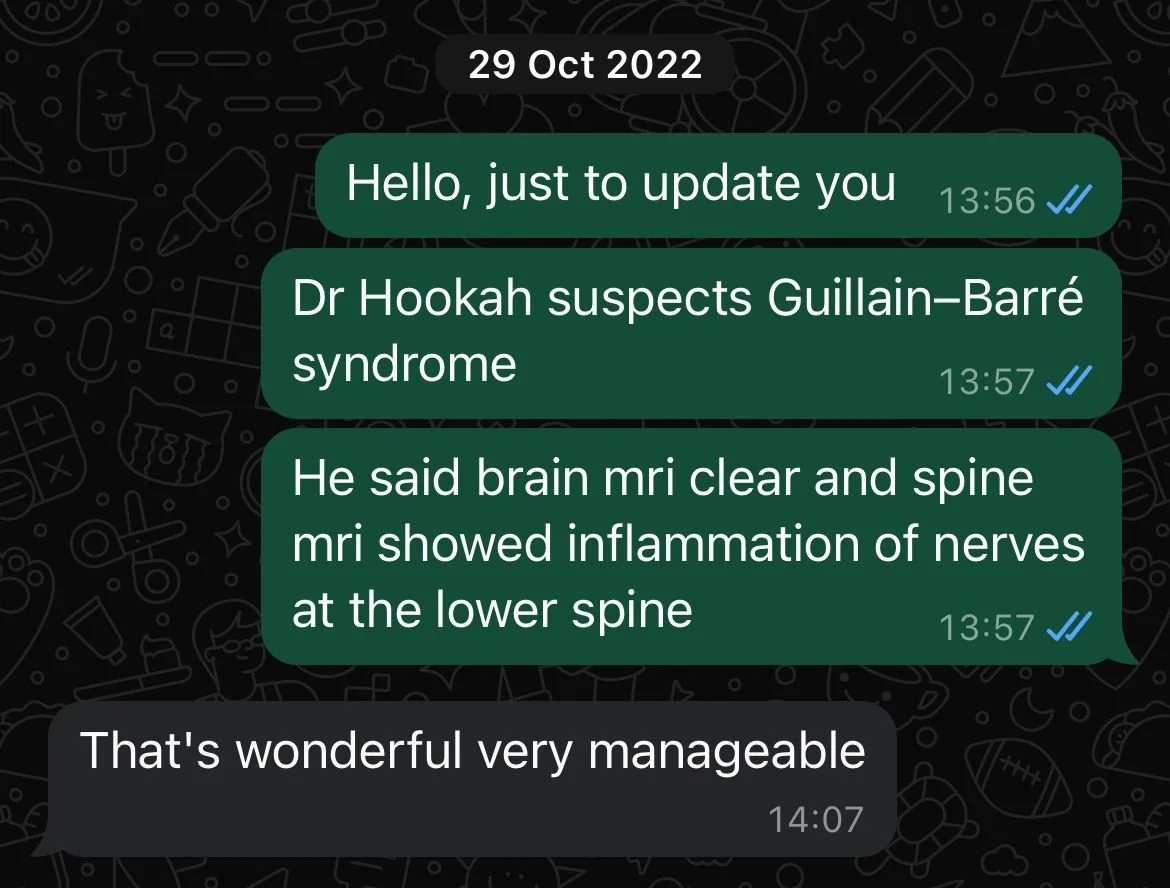
While I appreciated their effort to look it up, a deeper understanding would have revealed how severe GBS can be. For instance, it took me over 300 physiotherapy sessions to recover from my nerve damage. The lesson here is to dig deeper so you can better understand the challenges your loved one is facing to avoid downplaying their feelings.
Ask How to Respond
People with chronic illnesses have good days and bad days. On the harder days, when your loved one opens up to you, try asking: “Would you like me to just listen, or would you like me to offer solutions?” This simple question can make a world of difference, as it helps you meet their needs in the moment.
For example, I once had a breakdown about how I was feeling, and someone said, “At least your organs haven’t failed yet. It could be worse. You should be grateful.” While they meant well, it wasn’t what I needed to hear. What I truly needed was a hug and validation—something like, “I believe you” or “You’re so strong.” Their words, though well-intentioned, felt dismissive and made me feel even worse.
Sometimes, the best way to support someone is to simply listen and acknowledge their emotions. A thoughtful “How are you feeling?” can be far more impactful than offering advice or making assumptions about their condition.
It’s also crucial to remember that everyone’s pain, no matter their condition, is valid. We aren’t in their shoes, so we can never fully understand what they’re going through. It’s not a competition to determine whose pain is greater or more deserving of empathy. Avoid comparisons—they’re unnecessary and can invalidate what your loved one is experiencing. Instead, focus on offering understanding and care.
Be Sensitive
Medications for chronic illnesses often come with difficult side effects—mood swings, weight changes, and more. Personally, one medication made me extremely irritable, while another caused me to gain 5kg in a month. I remember running into someone I hadn’t seen in years but who knew I was unwell, and instead of asking how I was, they looked at me from up to down because I had gained weight and said, “Oh, you took the steroid.”
I was on nerve medications to manage my pain because I had it every.single.day for more than 500 days. Their comment made me so conscious because I had no choice but to be on that medicine. I went home and cried to my family for hours. Moments like these are a reminder to always be mindful of what you say. A little sensitivity goes a long way.
Show Up to Appointments
Doctor’s appointments can be intimidating, especially when discussing new or complicated treatments. Simply accompanying your loved one can make a world of difference. Having someone by their side provides comfort and reassurance during what might be an overwhelming experience.
Just Be There
Sometimes, the simplest gestures mean the most. Sitting in silence with your loved one, sending a message to let them know you’re praying for them, or reminding them that you’re thinking of them—these small actions show that you care. It’s not about solving their problems; it’s about letting them know they’re not alone.
Supporting a loved one with a chronic illness is challenging but deeply rewarding. By educating yourself, being sensitive, and showing up in meaningful ways, you can help make their journey a little less lonely and a lot more manageable.
Look After Yourself
Most importantly, remember to take care of yourself as someone supporting a loved one with a chronic illness. It’s a new and challenging experience for you, just as it is for them. Make sure you’re prioritizing your own well-being while helping your loved one because you can’t pour from an empty cup. Consider therapy, self-care routines, or anything else that helps you stay strong and balanced.
Please let me know if you have any questions on this topic, and I hope it helps.